





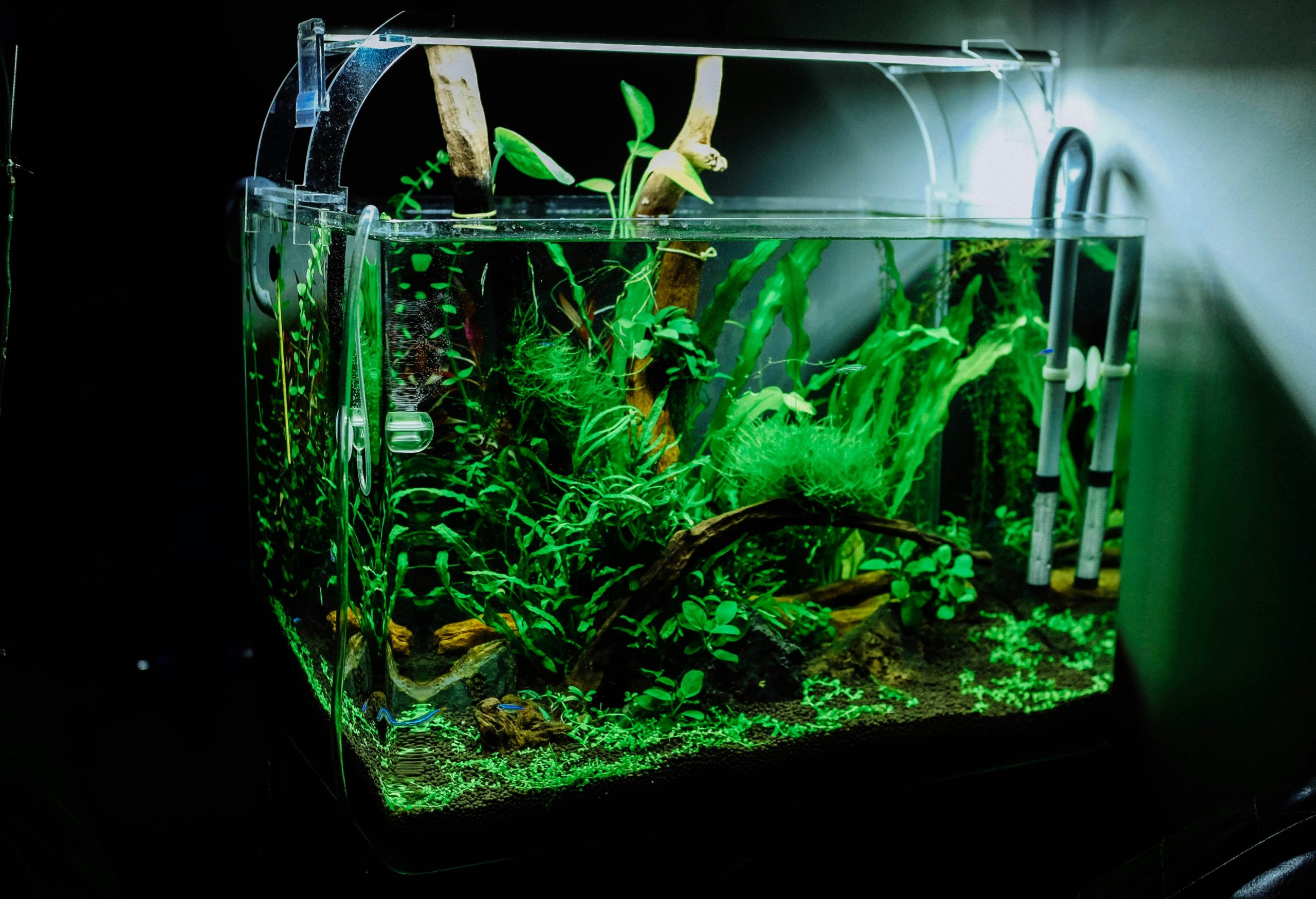
Lighting is often the single most misunderstood element of setting up an aquarium. While a basic light bulb might seem sufficient to view your fish, aquatic plants require specific spectrums and PAR (Photosynthetically Active Radiation) levels to drive photosynthesis.
Choosing the right LED lighting comes down to a clear understanding of your tank’s goals: Are you illuminating a fish-only setup, or supporting a thriving planted aquascape?
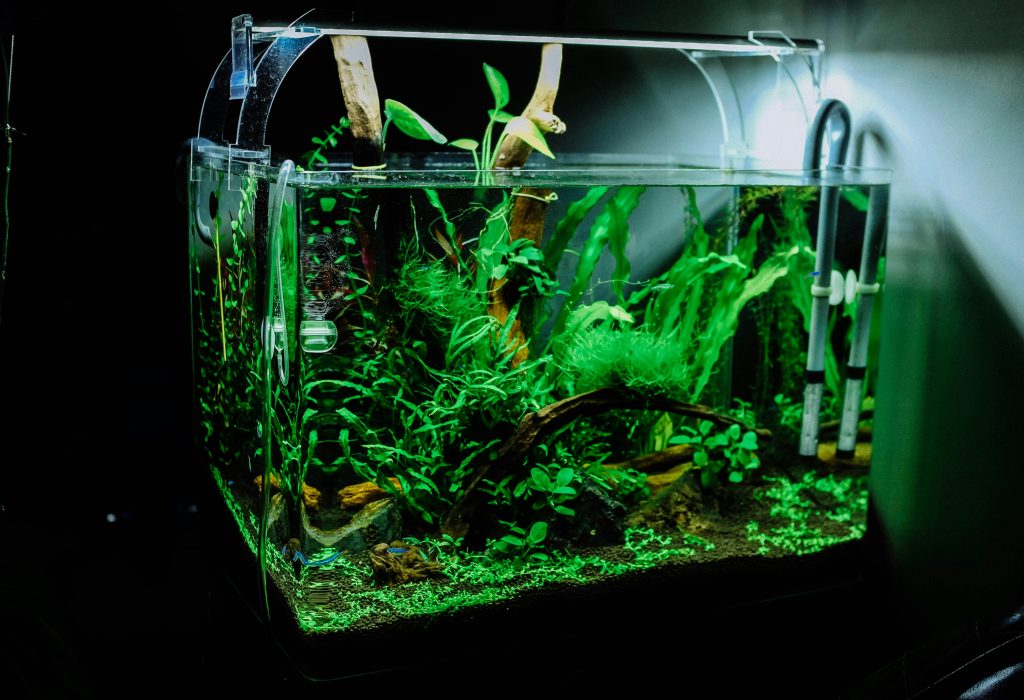
1. Fish-Only vs. Planted: Core Differences
Before investing in a light fixture, identify which category your setup falls under:
| Feature | Fish-Only (FO) / Artificial Plants | Planted Aquarium (Aquascape) |
| Primary Purpose | Visual viewing & fish color enhancement | Fueling plant photosynthesis & growth |
| Key Metric | Color Temperature (Kelvin) & aesthetic pop | PAR at substrate & PAR spread |
| Required Spectrum | Standard White or RGB accent diodes | Full-Spectrum RGB / WRGB (Red & Blue peaks) |
| Light Duration | Flexible (6–8 hours recommended to avoid algae) | Strict 6–8 hour photoperiod on a timer |
| Budget Requirement | Low to Moderate | Moderate to High |
2. Forget Watts: Focus on PAR and Spectrum
The old rule of “watts per gallon” was designed for outdated fluorescent tubes. Modern LEDs draw very little power while outputting vastly different amounts of light, making wattage a misleading metric.
Understanding PAR (Photosynthetically Active Radiation)
PAR measures the actual light intensity reaching your plants in wavelengths they can use for photosynthesis (400–700 nm). Substrate-level PAR is what determines plant success:
- Low-Light Plants (15–30 PAR): Anubias, Java Fern, Crypts, and Mosses thrive in lower light without requiring CO₂.
- Medium-Demand Plants (30–60 PAR): Stem plants like Rotala rotundifolia, Amazon Swords, and Val.
- High-Demand / Carpeting Plants (60–100+ PAR): Monte Carlo, Dwarf Hairgrass, and vibrant red stems (Ludwigia, Rotala H’Ra) require high PAR paired with pressurized CO₂.
Spectrum: RGB vs. Standard White LEDs
Standard white LEDs provide clear illumination for fish. However, plants heavily utilize red and blue light waves for chlorophyll absorption.
- WRGB (White, Red, Green, Blue) Fixtures: These combine individual color diodes to deliver full spectrum coverage. They fuel plant growth while making red fish and green foliage visually pop.
- Custom Spectrum Control: Advanced fixtures allow you to adjust individual color channels via a smartphone app or remote control to fine-tune visual warmth and intensity.
3. Managing Photoperiod to Avoid Algae
Leaving aquarium lights on for 12+ hours daily is the single most common trigger for algae blooms. Plants reach enzyme saturation after 6–8 hours of photosynthesis and stop absorbing light energy. Excess light after that point directly feeds unwanted green dust, hair, and brush algae.
- Recommended Photoperiod: Keep daily lighting strictly between 6 and 8 hours.
- Use a Timer or Smart Plug: Automated daily timing is critical to maintain stability and avoid inconsistent lighting schedules.
- Ramp-Up Protocol: When setting up a new tank or installing a powerful new fixture, start at 50% intensity for the first 2–3 weeks and slowly ramp up by 10% each week as plants establish.
4. Key Checklist Before Buying
- Measure Tank Depth & Width: Deeper tanks (over 18 inches / 45 cm) require stronger light penetration to deliver sufficient PAR to the substrate.
- Look for Programmable Dimming: Dimmable lights give you precise control to dial down output if algae appears.
- Verify Mounting Flexibility: Ensure the fixture includes adjustable extendable legs or hanging kits to fit your rimless or rimmed tank setup.